Working with Glyptodon (or “Glyp,” for those in the know) has been an incredibly enriching experience.
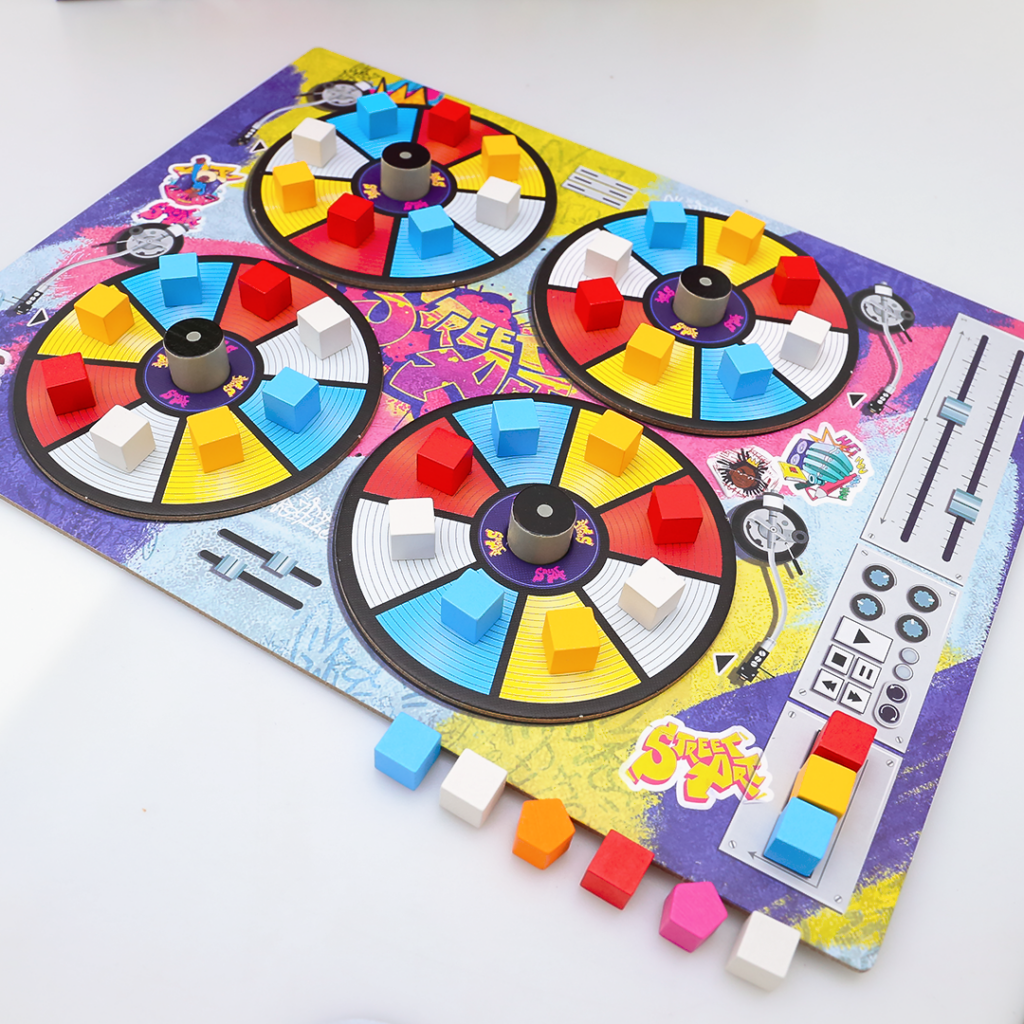
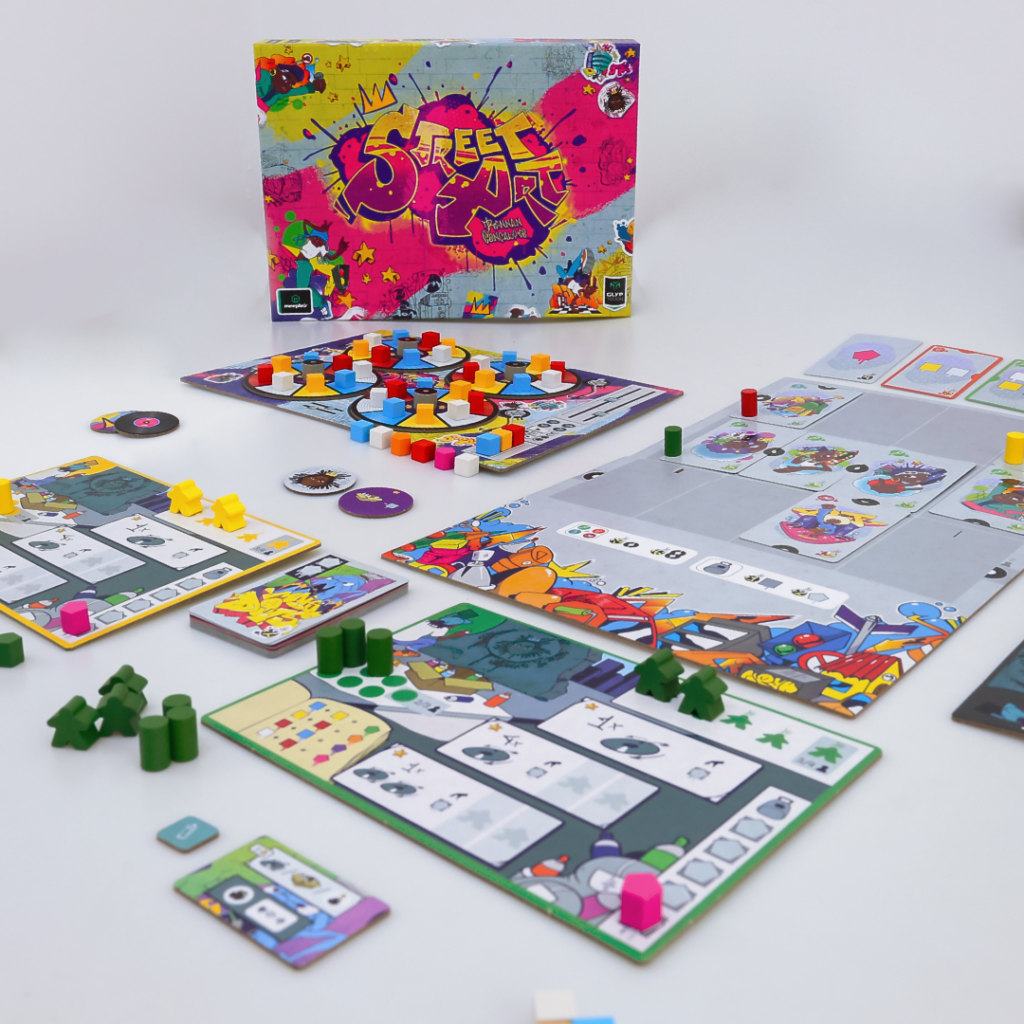
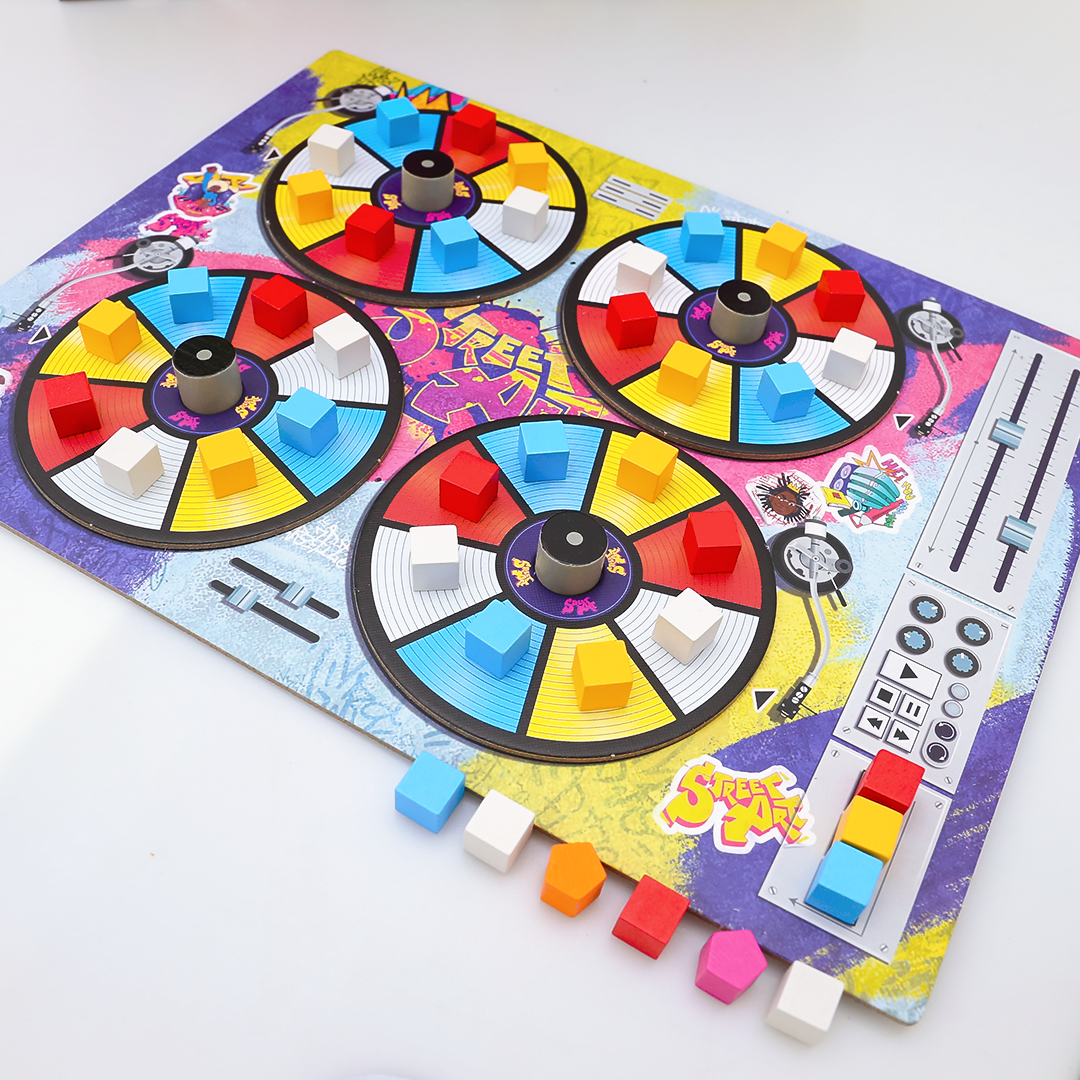
From the very beginning, with Street Art, the studio’s level of care was immediately evident to me. It was a project that required respect, as it spoke to a marginalized, vibrant, and powerful culture. Having Glyp’s support to ensure the integrity of the proposal, by involving Black, female, and peripheral artists from the graffiti scene, transformed the project into something beyond just a game; it became a work of art. It’s an experience that simulates a walk through the streets of São Paulo, as if the game board itself were an urban gallery.
It was during this process that I realized this is a studio committed not only to the technical side of game development but also to listening, caring, and collaboratively building ideas.
Partnering with Glyp also provides the security to experiment with new mechanical concepts, and 1890 demonstrates this perfectly. It is a game that starts from a specific niche but performs a beautiful exercise in democratizing a more complex style of play, transforming it into an experience that is accessible and streamlined, yet still deep and full of possibilities.
Another point I find highly valuable is the network of professionals that orbits the studio. These are people with diverse experiences and diverse perspectives, both on the gaming market and on the world at large. This fosters very rich discussions and the positive evolution of our projects.
Being a partner to Glyptodon has definitely been a true creative masterclass. It comes with its challenges, deadlines, and pressures (as any good creative process should) but above all, it has been deeply rewarding to see that the work is taken seriously and that developers here are listened to, heard, and respected.
Thank you to the entire Glyptodon team. The board game industry is better for having you in this market, with such excellence, care, and commitment.